Central Texas Metal Buildings

Burnet County, TX. County seat Burnet

Metal buildings in Burnet County, TX: the address, then the permit, then the septic

Outside the cities in Burnet County, the building permit comes from County Development Services at 220 S Pierce Street in Burnet, and the county prices it two ways: $25 for a Class A permit on a lot outside any flood hazard area, $400 for a Class B permit on a lot inside one.

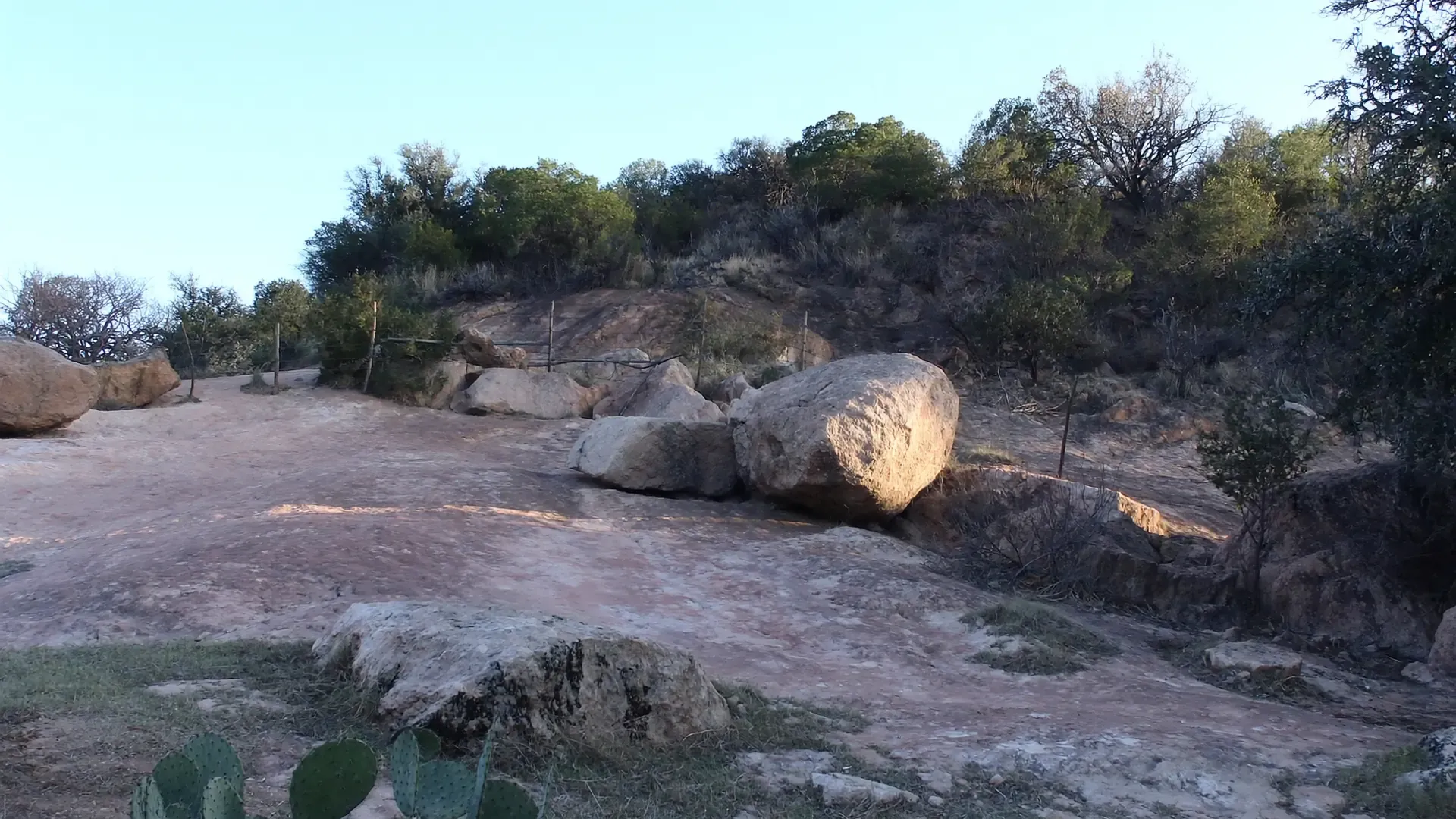
Pink granite outcrops and thin soil on the Llano Uplift near Burnet, Texas. Illustrative photograph, not a project record.

The order around it is fixed. A 911 address for a new residence or business comes first, then the building permit, and the county issues no septic permit until the building permit exists.

Keep reading

The county page states no building code and describes neither plan review nor a structural inspection, so what the $25 buys is an application and a payment. Inside Burnet, Marble Falls, Bertram or Granite Shoals a city permit replaces the county one, and on the lake zones the septic permit is not the county's at all. Each line below carries the page it was read at and the day, 2026-09-20.

Inside Burnet

City building permit for any added structure

The City of Burnet Building Department says a building permit is required for any construction which physically changes or adds structures to the property, lists a Commercial Building Permit among its permit types, names garages and accessory structures such as storage sheds over 120 square feet among the projects that need one, and says building can begin once the permit is issued and the permit runs out after 180 days if construction has not continued.

What the county's page says

The page states no code edition.

Source City of Burnet Building Department, 301 E Jackson St, read 2026-09-20.

Unincorporated Burnet County

County building permit: Class A $25, Class B $400 inside a flood hazard boundary

Burnet County requires building and septic permits, in a fixed order: a 911 address for any new residence or business first, then the building permit, and the county issues no septic permit until the building permit exists.

What the county's page says

One application carries two classes, and the flood hazard boundary is the line between them.

Source Burnet County, on-site sewage facilities and development permits, read 2026-09-20.

Which office has your lot decides everything below.

Where do metal building contractors in Burnet County pull the permit, and what are the two classes?

At Burnet County Development Services, 220 S Pierce Street in Burnet, (512) 756-5445, on one application that carries both classes. Class A covers a lot outside any designated flood hazard area: $25, the application and the payment. Class B covers a lot inside a designated flood hazard boundary: $400, and the packet grows by a site plan showing the flood zone, plus either a surveyor's elevation certificate or an engineer's letter. The county says to call that same number to verify whether a property is in or out of the flood hazard area, and it does not accept incomplete packets.

Two things that permit does not include. The county's page states no building code, so nothing there tells you which edition the steel is designed to, and it describes no plan review, so the drawings are not read by a county reviewer before the permit issues. An independent local metal building contractor who works Burnet County brings the drawings for a commercial metal building, and a Texas professional engineer seals the sheets where a record calls for a seal. How differently the same question lands one county over is set out on metal building permits in Austin and Travis County.

Burnet County's two building permit classes, from the county's own development permits page, read 2026-09-20.

On a phone this table scrolls sideways.

QuestionClass AClass B
Which lot it coversOutside any flood hazard areaInside a designated flood hazard boundary
Fee$25$400
What goes in the packetThe application and the paymentThe application, the payment, a site plan showing the flood zone, and either a surveyor's elevation certificate or an engineer's letter
Inspection of the structureThe county page says noneThe county page states nothing either way
Who settles the flood questionDevelopment Services, (512) 756-5445Development Services, (512) 756-5445, and the surveyor or engineer who signs the elevation certificate

SourcesBurnet County, on-site sewage facilities and development permits, read 2026-09-20; Burnet County, on-site sewage facilities and development permits, and the Development Services page, read 2026-09-20.

Floodplain, septic and the driveway: who takes each one here?

Floodplain review in Burnet County is not a separate desk. It rides on the Class B permit, and Development Services is the office that verifies flood hazard status by phone. The county's Development Services page lists floodplain development among the office's duties, and that page itself could not be loaded on 2026-09-20, so no freeboard rule and no administrator's name print on this site for Burnet County.

Septic comes after the building permit, never before it. The county issues the permit on a site evaluation by a licensed site evaluator, a drawing or design of the system and whatever maintenance contract the system type requires, at $250 for most systems and $400 for an aerobic system, and in most cases the licensed installer files the application. TCEQ's authorized agent directory splits the county: the county holds the unincorporated area plus Bertram and Horseshoe Bay outside Lower Colorado River Authority jurisdiction, and LCRA holds the restricted and water quality zones of Lakes Buchanan, Inks, LBJ, Marble Falls and Travis, and Granite Shoals with them. LCRA publishes $260 for a conventional system and $410 for a professionally designed one, which on a commercial system covers the first 500 gallons a day, plus $45 for each additional 500 gallons a day and $10 for the state research fund; it takes applications at mygovernmentonline.org or (512) 578-3216 and issues an Authorization to Construct after a site visit and plan review, then a Permit to Operate at completion. The county links LCRA's jurisdiction map rather than naming which lake lots fall inside it, so that map and that phone number answer for one parcel. The rest of the path to a working building is on commercial septic, water and electric for a shop or warehouse.

The driveway is where the county record runs out. Neither Burnet County page read on 2026-09-20 names a driveway or culvert permit for a county road, and the published duties of the office stop at 911 addressing, septic and development permits, subdivision development, floodplain development, outdoor burning and FEMA flood maps. Read that as an absence on the county site and nothing more, then settle it with one call to Development Services at (512) 756-5420. Where the drive meets a state highway the county is not the answer anyway, as the county record itself says.

SourcesTexas Commission on Environmental Quality, OARS authorized agent record, Lower Colorado River Authority, read 2026-09-20; Lower Colorado River Authority, on-site sewage facility fee schedule and steps to get a permit, read 2026-09-20; Burnet County, on-site sewage facilities and development permits, and the Development Services page, read 2026-09-20; Burnet County, on-site sewage facilities and development permits, and the TCEQ authorized agent directory, read 2026-09-20.

Inside Burnet, Marble Falls, Bertram or Granite Shoals, the city permits the building

Four city pages were read for this county and they do not converge, which matters while you are still choosing a lot. The cities table below prints each one in full, with the department, the number and the day it was read. The pattern across them: two of the four publish an adopted building code edition and two state none, two run plan review through a third-party reviewer rather than city staff, one prices its permit off construction value, another off square footage, and one page states no building permit fee at all.

Two details there are worth a second read. Marble Falls takes new commercial construction through a commercial plan review with engineer-stamped plans, the only engineer-stamped requirement any office in this county publishes. Granite Shoals wants an LCRA septic permit application number and a 911 address verification from Burnet County before its own permit, so that city permit will not move until two other agencies have answered first. Horseshoe Bay and Cottonwood Shores sit in this county too; no page was read for either, so this site says only that each runs its own permits, and those offices are the ones to confirm with.

Granite on one side, limestone on the other: what does Burnet ground do to a slab?

Two different rocks under one county. The Soil Survey of Blanco and Burnet Counties (1979) puts most of the survey area in the eastern Edwards Plateau and the southern Grand Prairie, where very shallow and shallow limestone soils, Brackett, Doss, Eckrant, Hensley, Purves and Tarpley, make up about 74 percent of it and rate low for urban uses and for sanitary facilities; Eckrant is eight to 18 inches of cobbly clay over fractured indurated limestone. To the northwest and west the Texas Central Basin of the Llano Uplift reaches in, and there the parent rock is Town Mountain Granite: Keese soils run 11 to 20 inches of gravelly sandy loam over indurated granite, while Click soils carry a 40 to 60 inch profile over the same rock.

What that does to a building. The survey's own engineering section says shrinking and swelling in some soils can damage building foundations and other structures unless special designs are used, and that soils may be shallow to bedrock or too unstable to serve as a foundation, which are two opposite problems on one county map. Shallow rock is good to bear on and slow to cut, so money moves out of the slab and into the excavation and the septic field, and the same sentence that rates 74 percent of the survey area low for sanitary facilities is the reason to book the site evaluation early. The Bureau of Economic Geology's 1972 guidebook to the Llano region and the Austin area frames both soil groups: a broad domal arch where Precambrian igneous and metamorphic rocks reach the surface as an island about 65 miles wide, rimmed by the flat-topped limestone hills of the plateau. What the engineer does with all of it is on the slab and foundation guide.

SourcesUSDA Soil Conservation Service, Soil Survey of Blanco and Burnet Counties, Texas (1979), introduction and general soil map, read 2026-09-20; USDA Soil Conservation Service, Soil Survey of Blanco and Burnet Counties, Texas (1979), geology, the Keese and Click series, and engineering, read 2026-09-20; Bureau of Economic Geology, Guidebook 13, Geology of the Llano Region and Austin Area (1972), read 2026-09-20.

Which state rules apply whatever office permits the lot?

Three of them, and none cares which side of a city line the lot sits on. The first is the accessibility line: the Texas Department of Licensing and Regulation says a project whose total estimated cost is $50,000 or more submits a full set of construction documents for registration and plan review, while a project under that figure is not submitted at all and the Texas Accessibility Standards still apply to it. A $25 county permit does not move that line one dollar.

The second is stormwater, and it counts acres, not square feet. Under TCEQ general permit TXR150000, five or more acres disturbed, or work that is part of a larger common plan of development or sale that will reach five, is a large construction activity; at least one acre and under five is a small one; under one acre, and not part of a larger common plan disturbing an acre or more, is not regulated by the permit. A pad with its drive and apron can cross the acre line before the building itself is large.

The third is septic as the state writes it. TCEQ requires a permit to construct, install, alter, extend or repair an on-site sewage facility, says local permitting programs can be stricter than the state minimums, and gives the permitting authority 30 days from receipt to approve or deny the planning materials and the application, with a written explanation for a denial. In this county that authority is Burnet County, or LCRA inside its zones. The whole sequence, from the first jurisdiction question to the steel, runs in order on building a metal building in the Austin area.

SourcesTexas Department of Licensing and Regulation, Architectural Barriers frequently asked questions, read 2026-09-20; Texas Commission on Environmental Quality, stormwater general permit for construction activities (TXR150000), read 2026-09-20; Texas Commission on Environmental Quality, getting a permit for an OSSF such as a septic system, read 2026-09-20.

Power and the road: PEC and the TxDOT Austin District

Pedernales Electric Cooperative's tariff, effective June 1, 2026, lists Burnet among the counties it may serve and names Marble Falls and Bertram among its franchise cities. Where a location has no service, the applicant stakes the site, gathers site plans, civil plans and electrical diagrams, with an approved site plan and plat for commercial work, applies at the nearest district planning office at (877) 372-0391 and pays the $50 membership, $50 establishment and $200 system impact fees. PEC then meets on site, provides one design with any redesign subject to a redesign fee, gives cost estimates only after the account is set up and a field meeting has taken place, invoices the cost, builds and sets the meter. Its tariff also lists a planning design or redesign fee of $500 or actual cost, whichever is greater, which PEC may require as an advance deposit and credits against the extension cost. No day count is stated anywhere in it, so a shop or workshop schedule that assumes one is guessing.

The road half is TxDOT's wherever the drive meets a state highway. The owner, or an authorized representative, files Form 1058 at the local district office. Two conditions clear the way onto the state right of way: the permit is fully executed, and the district has had its 24 hours of notice. An inspector reviews the finished work. Burnet County sits in the TxDOT Austin District, an 11-county district run from 7901 N. I-35 in Austin at (512) 832-7000, with an area engineer office and a maintenance office at Burnet. The two counties next door answer the county half of the question their own way: Williamson County publishes no county building permit, no building code and no certificate of occupancy outside its cities, and Travis County requires a Development Permit there instead.

SourcesPedernales Electric Cooperative, service for individual residential or commercial locations, and the tariff and business rules, read 2026-09-20; Texas Department of Transportation, Access Management Manual, chapter 2 section 4, permits, and the Use of Right of Way by Others Manual, access driveways, read 2026-09-20; Texas Department of Transportation, Austin District, and Austin District contacts and offices, read 2026-09-20; The source was read and does not list this.Williamson County, frequently asked questions, infrastructure and developers, read 2026-09-20; Travis County TNR Development Services, Commercial Site Plan, read 2026-09-20.

The permit stack in Burnet County, TX

Every permit and rule this county publishes for work outside its cities, with the office to call, the number, where it was read and when.

AuthorityWhat the county's site saysOfficeSource
Building permit outside city limits Burnet County requires building and septic permits, in a fixed order: a 911 address for any new residence or business first, then the building permit, and the county issues no septic permit until the building permit exists. One application carries two classes, and the flood hazard boundary is the line between them. Class A, outside any flood hazard area, is $25 and asks for the application and the payment. Class B, inside a designated flood hazard boundary, is $400 and asks for the application, the payment, a site plan showing the flood zone, and either a surveyor's elevation certificate or an engineer's letter. The county says to call (512) 756-5445 to verify whether a property is in or out of the flood hazard area, and incomplete packets are not accepted. The page states no building code and describes neither plan review nor a structural inspection on either class. Burnet County Development Services, 220 S Pierce Street, Burnet, (512) 756-5445 Burnet County, on-site sewage facilities and development permits, read 2026-09-20
Floodplain development Floodplain review in Burnet County runs through the Class B building permit. A site inside a designated flood hazard boundary files the $400 Class B permit, and the packet adds a site plan showing the flood zone plus either a surveyor's elevation certificate or an engineer's letter. The county's Development Services office is the one that verifies flood hazard status by phone. The county's Development Services page lists Floodplain Development among the office's duties; that page itself could not be loaded on 2026-09-20, so the freeboard rule and the administrator's name are not recorded here. Burnet County Development Services, (512) 756-5445 Burnet County, on-site sewage facilities and development permits, and the Development Services page, read 2026-09-20
On-site sewage facility (septic) permit Burnet County issues the septic permit after the building permit, on a site evaluation by a licensed site evaluator, a drawing or design of the system and any maintenance contract the system type requires; the permit costs $250 for most systems and $400 for an aerobic system, and in most cases the licensed installer submits the application. TCEQ's directory lists Burnet County as authorized agent for the unincorporated county plus Bertram and Horseshoe Bay outside LCRA jurisdiction, and the Lower Colorado River Authority for the restricted and water quality zones of Lakes Buchanan, Inks, LBJ, Marble Falls and Travis and for Granite Shoals. The county links LCRA's jurisdiction map rather than stating which lake lots fall inside it. Burnet County Development Services, 220 S Pierce Street, Burnet; LCRA on the lakes, (512) 756-5437 Burnet County, on-site sewage facilities and development permits, and the TCEQ authorized agent directory, read 2026-09-20
Driveway permit onto a county road Read, not listed. The Burnet County pages read on 2026-09-20, the development permits page and the Development Services office page, list no driveway or culvert permit for a county road; the office lists 911 addressing, septic and development permits, subdivision development, floodplain development, outdoor burning and FEMA flood maps. A driveway onto a state highway is a TxDOT matter whatever the county says. Burnet County Development Services, (512) 756-5420 Burnet County, Development Services, read 2026-09-20

Burnet County answers with a stated order and two priced permit classes, and the six-county permit directory sets that answer beside what the other five ask for on one sheet. All six counties on one sheet: the Central Texas metal building permit directory.

Inside the cities

CityWhat the city's site saysDepartmentSource
Burnet The City of Burnet Building Department says a building permit is required for any construction which physically changes or adds structures to the property, lists a Commercial Building Permit among its permit types, names garages and accessory structures such as storage sheds over 120 square feet among the projects that need one, and says building can begin once the permit is issued and the permit runs out after 180 days if construction has not continued. The page states no code edition. City of Burnet Building Department, 301 E Jackson St, (512) 715-3206 City of Burnet Building Department, 301 E Jackson St, read 2026-09-20
Marble Falls Marble Falls requires a building permit for any building or structure erected, constructed, enlarged, altered, repaired, moved, improved, removed, converted or demolished, and any new commercial construction goes through a commercial plan review with engineer-stamped plans. The city adopted the 2024 International codes and the 2023 National Electrical Code with local amendments. Its fee schedule charges new commercial construction $5 per $1,000 of construction value, including all trade permits, plus commercial plan review at $200 up to 10,000 square feet, $300 to 30,000 and $450 above, and prices a residential accessory structure at $0.25 per square foot plus 10 percent per trade with a $50 minimum. The Building Official is also the Floodplain Administrator. City of Marble Falls Development Services, Building Division, 801 4th Street, (830) 798-7088 City of Marble Falls Development Services, Building Division, 801 4th Street, read 2026-09-20
Bertram Bertram handles permits and inspections through the VertexPlans portal run by its third-party reviewer, and issues the permit after that reviewer approves the design documents. Its Development Services page states no adopted building code edition, no building permit fee and no sentence on when a permit is required for a commercial or accessory building; a 2025 ordinance adopts the 2000 International Energy Conservation Code as the city's energy code. City of Bertram Development Services, 110 East Vaughan Street, (512) 355-2197 City of Bertram Development Services, 110 East Vaughan Street, read 2026-09-20
Granite Shoals Granite Shoals' Building and Development Department handles new commercial projects and tenant change-outs with plan review and inspection by a third-party provider, takes every application through its online permitting portal, and its new-construction checklist says the city has adopted the 2018 International codes and the 2017 National Electrical Code, sets the permit fee at $1.25 per square foot, requires an LCRA septic permit application number and 911 address verification from Burnet County, and requires a culvert on every lot. City of Granite Shoals Building and Development, (830) 598-2424 City of Granite Shoals Building and Development, read 2026-09-20

Also inside this county, each with its own permit office to confirm with: Horseshoe Bay, Cottonwood Shores.

The ground under Burnet County, and the documents that describe it

The Soil Survey of Blanco and Burnet Counties (1979) puts the two counties in the eastern Edwards Plateau and the southern Grand Prairie, with the Texas Central Basin of the Llano Uplift reaching into the northwestern and western part. The very shallow and shallow limestone soils of the plateau and prairie, Brackett, Doss, Eckrant, Hensley, Purves and Tarpley, make up about 74 percent of the survey area and have low potential for urban uses and sanitary facilities; Eckrant soils are eight to 18 inches of cobbly clay over fractured indurated limestone. Source: USDA Soil Conservation Service, Soil Survey of Blanco and Burnet Counties, Texas (1979), introduction and general soil map, read 2026-09-20.

On the Llano Uplift side, Town Mountain Granite is the parent material of the Click, Keese and Voca soils. Keese soils are shallow gravelly sandy loams 11 to 20 inches thick over indurated granite, and the Keese-Nebgen unit has low potential for urban uses because of shallow depth to granite or sandstone bedrock, slope and rockiness; Click soils are deep gravelly sandy loams with a 40 to 60 inch profile over granite. The survey says shrinking and swelling of some soils can damage building foundations and other structures unless special designs are used, and that soils may be shallow to bedrock or too unstable to serve as a foundation. Source: USDA Soil Conservation Service, Soil Survey of Blanco and Burnet Counties, Texas (1979), geology, the Keese and Click series, and engineering, read 2026-09-20.

The Bureau of Economic Geology describes the Llano Uplift as a broad domal arch where Precambrian igneous and metamorphic rocks reach the surface as an island surrounded by Paleozoic and Cretaceous rocks, about 65 miles wide westward from the Colorado River valley and rimmed by the flat-topped limestone hills of the Edwards Plateau. Source: Bureau of Economic Geology, Guidebook 13, Geology of the Llano Region and Austin Area (1972), read 2026-09-20.

Asked before pricing

Do metal building contractors in Burnet County need a state license?

There is no state license in Texas for a general contractor or a home builder, so nobody putting up a metal building here holds one. The trades are separate and do: TDLR issues the electrical licenses and licenses air conditioning and refrigeration contractors, and the Texas State Board of Plumbing Examiners licenses the plumbing trade. Your request goes to an independent local metal building contractor who works Burnet County, and sealed sheets, where a record calls for them, come from a Texas professional engineer.

What does a building permit cost in unincorporated Burnet County?

$25 for a Class A permit, on a lot outside any flood hazard area, which asks for the application and the payment and nothing else; the page describes no structural inspection on it. $400 for a Class B permit, on a lot inside a designated flood hazard boundary, which adds a site plan showing the flood zone and either a surveyor's elevation certificate or an engineer's letter. Call Development Services at (512) 756-5445 to verify which one the lot is in.

Why does Burnet County want a 911 address before it will issue a septic permit?

Because the county publishes the three permits in a fixed order. A 911 address for any new residence or business comes first, the building permit second, and the county states that it issues no septic permit until the building permit exists. So the address request is the first call on a new build, not a loose end at the end of one. Development Services handles all three at 220 S Pierce Street in Burnet, (512) 756-5445.

Who issues the septic permit on a lake lot in Burnet County?

The Lower Colorado River Authority rather than the county, inside its own zones. TCEQ's authorized agent directory lists LCRA for the restricted and water quality zones of Lakes Buchanan, Inks, LBJ, Marble Falls and Travis, and for Granite Shoals, while Burnet County keeps the rest of the unincorporated county plus Bertram and Horseshoe Bay outside LCRA jurisdiction. The county links LCRA's jurisdiction map instead of naming the lots, so call LCRA at (512) 578-3216 to settle one parcel.

Free estimate, six questions

Price a metal building in Burnet County

The county tells a contractor which permit office your lot answers to. The building and the timing tell them what to look at first. Pricing it is free, and you owe nothing either way.

By submitting this form, I agree that Central Texas Metal Buildings and a metal building construction contractor may contact me at the phone number and email address I provided, including by automated phone calls and prerecorded messages, regarding metal building construction services. Consent is not a condition of any purchase. Message and data rates may apply. I may opt out at any time by asking to be removed during any call or by replying to any email. See our Privacy Policy.

Your request goes to an independent local metal building contractor serving Central Texas, not a national lead list.

Ready to put a price on the building?

Your request goes to an independent local metal building contractor serving Central Texas, not a national lead list. Pricing it is free, and you owe nothing either way.

Last reviewed 2026-09-20.

Price my building