Central Texas Metal Buildings

What gets built

Commercial metal buildings in Central Texas, and the office that has your lot

A commercial metal building here is a steel-framed retail, office, flex or service building on a slab, sized for a business that outgrew leased space or bought ground on the edge of Austin.

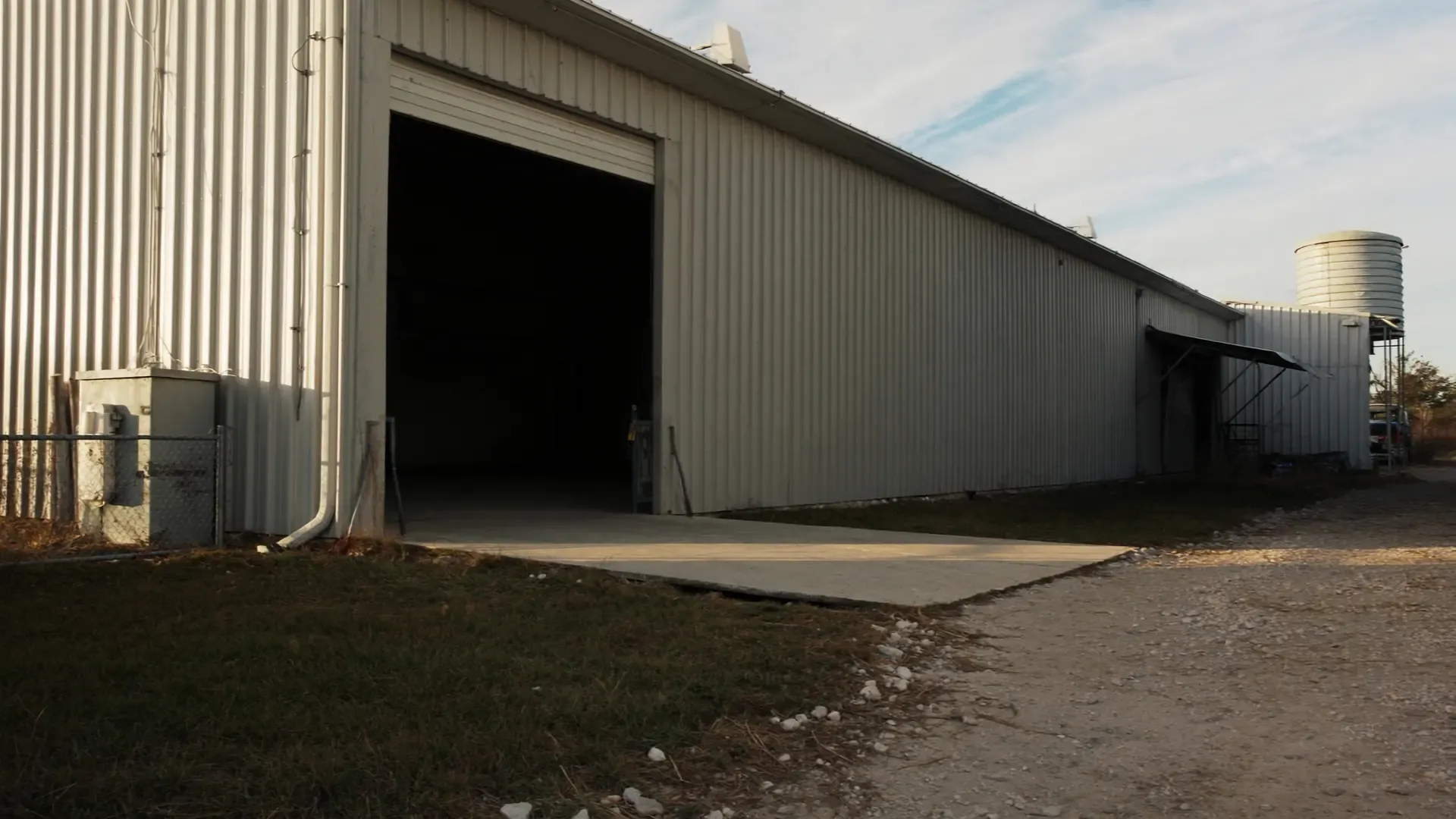
A commercial metal building with its door open on a concrete apron in Central Texas. Illustrative photograph, not a project record.

An independent local metal building contractor who works your county prices it, and only the one who walks the lot can put a number on the finished building. What sets the schedule is not the steel.

Keep reading

It is which office has the address: inside Austin the building goes through a city plan review with a site plan in front of it, and past the city limits the answer is different in each of Travis, Williamson, Bastrop, Caldwell, Lee and Burnet counties.

Inside Austin

Commercial plan review, seven to 20 business days by size

Inside Austin a building permit is required to erect, construct, enlarge, alter, repair, improve, remove, convert, move or demolish any building or structure within the city's zoning jurisdiction, and a commercial building goes through the Development Services Department's commercial plan review under the locally amended 2024 International Building Code, in force since July 10, 2025.

Source City of Austin Development Services, 6310 Wilhelmina Delco Drive, read 2026-09-20.

Unincorporated Travis County

County development permit, plus a Fire Marshal permit for a commercial building

Outside city limits, Travis County requires a Development Permit, and its definition of development covers buildings and other structures, driveways, right-of-way work and on-site sewage facilities.

Source Travis County TNR Development Services, Commercial Site Plan, read 2026-09-20.

Travis County, read at the county's and the city's own pages. Every county answers this on its own sheet. The whole record is on that county's sheet.

What a commercial metal building is here, and what owners put in one

Retail, office, flex and service buildings, framed in red iron and skinned in steel panel. A rigid frame carries the roof on columns at the walls, so the floor is open sidewall to sidewall: no posts through a showroom, a fleet bay or a leasable suite. The manufacturer cuts the frame to your dimensions and the loads it carries, then ships it with the column reactions the foundation is drawn to.

What gets built on this footprint: a contractor yard with an office up front and shop bays behind, a service building with grade doors along one wall, a flex shell split into suites, a showroom with a storefront on the street elevation. The decisions that move money are the eave height, the clear span, the door schedule, the insulation, and whether the building will be heated and cooled. Everything after that is paperwork, and the paperwork is where the schedule lives.

What does a commercial metal building need inside Austin?

The site plan is settled first. Austin takes no commercial building permit application until an approved site plan, a site plan correction or a site plan exemption is in hand, and the two run together only on an approved concurrent review request.

The permit is reviewed under the 2024 International Building Code with the city's local amendments, in force since July 10, 2025. Development Services publishes targets from July 15, 2026 by size: seven business days for new construction up to 10,000 square feet, 10 business days from 10,001 to 25,000, and 20 business days above 25,000. Minor revisions and small projects are listed at five, and from the second update submission on, each update carries a fee.

Three things ride in the application at this size. Over 5,000 square feet, plans for the work are sealed by a professional engineer under Building Criteria Manual 1.8.0. Structural plans on new construction come with a site-specific geotechnical report, and every project carries a statement of special inspections. The TDLR registration confirmation goes in with the package. The FY 2025-26 commercial plan review fee starts at a $2,949.82 base up to 1,500 square feet and steps up by square footage, with a $176.76 application processing fee and a $250 fire building permit review, paid at submittal and non-refundable; trade permit fees are paid at issuance.

SourcesCity of Austin Development Services, site plans, exemptions and corrections, and Land Development Code 25-5-2 on Municode (Supp. No. 174), read 2026-09-20; City of Austin Development Services, commercial plan review, read 2026-09-20; City of Austin Development Services, commercial building plan review and inspection permit fees (FY 2025-26) and the commercial building application checklist, read 2026-09-20; City of Austin Development Services, building technical codes, read 2026-09-20.

Which office permits a commercial metal building outside the cities?

Whichever one that county's own pages name, and the six answers are not the same answer. Find the row for the county the lot sits in, then read that county's sheet: Travis County carries the development fee schedule, the floodplain permit and the septic authority in full.

Where a cell says a county's pages list nothing, that records what the county publishes, not a finding that nothing applies. The floodplain permit, the septic permit and the state rules below this table ride on top of every row. The Burnet record cited here is that county's building and septic permit page; for anything it does not cover, Burnet County Development Services is at (512) 756-5445.

What each county's own pages say about a commercial building outside its city limits, read 2026-09-20. Sources below.

On a phone this table scrolls sideways.

CountyCounty permit outside city limitsCounty fire code permit
Travis CountyDevelopment (Non-Residential) permit, with a sealed cost estimate and an engineer-sealed site plan; no building code edition statedFire Marshal building permit and plan review before construction of a commercial establishment, 2021 International Fire Code
Williamson CountyNo county building permit, building code or certificate of occupancy listed; a $25 Certificate of Compliance from the County Engineer checks the floodplainFire Marshal fire code permit before construction starts, 2018 International Fire Code
Bastrop CountyDevelopment permit for any external development, on the Non-Single Family application with an engineer-stamped civil plan set; no building permits or certificates of occupancy issuedThe county lists no fire marshal, no fire code and no fire code permit
Caldwell CountyCommercial Site Construction Permit with engineer-certified drawings and proof of TDLR registration, approved by the County Engineer; the ordinance adopts no building codeCounty fire code permit effective August 13, 2026, 2024 International Fire Code
Lee CountyDevelopment Permit for all development, commercial included, for any structure larger than 100 square feetThe Development Services page names no fire code or fire marshal
Burnet CountyCounty building permit in two classes: Class A at $25 outside a flood hazard area, Class B at $400 inside one; no building code statedNot recorded here

SourcesTravis County TNR Development Services, Commercial Site Plan, read 2026-09-20; Travis County Fire Marshal, permits and plan reviews, and Travis County Code Chapter 201, read 2026-09-20; The source was read and does not list this.Williamson County, frequently asked questions, infrastructure and developers, read 2026-09-20; Williamson County Fire Marshal, construction permits, and the Williamson County Fire Code, second edition, read 2026-09-20; Bastrop County Development Services, and the Development Services application fees, read 2026-09-20; Caldwell County Development Ordinance, revised February 14, 2023, and the subdivision and development fee schedule, read 2026-09-20; Caldwell County Fire Code adopted August 13, 2026, and the order adopting it, read 2026-09-20; Lee County Development Services Department, read 2026-09-20; Burnet County, on-site sewage facilities and development permits, read 2026-09-20.

Does the $50,000 accessibility line reach your commercial building?

If the estimated construction cost is $50,000 or more and the building is one the accessibility law lists, yes. Government Code 469.003 names the covered categories, and two are privately funded: a public accommodation under the federal Americans with Disabilities Act constructed, renovated or modified on or after January 1, 1992, and a commercial facility under that Act on or after September 1, 1993. Which category a building falls in is decided on its use, not on how it is framed.

Under the line the standards still apply. The Texas Department of Licensing and Regulation says a project whose total estimated cost is under $50,000 is not submitted for registration or plan review, and that the Texas Accessibility Standards reach it anyway; at $50,000 or more a full set of construction documents goes in under Administrative Rule 68.50.

Timing is what moves a schedule. Government Code 469.102 puts the duty to submit on the architect, interior designer, landscape architect or engineer with overall design responsibility, due no later than the 20th day after the plans are issued, weekends and legal holidays excluded. The owner may not apply for a local building permit or start construction before the plans are submitted, and a local permit official may not accept the application unless registration is verified. Fees and the inspection after completion are on TDLR registration for projects over $50,000.

SourcesTexas Legislature Online, Government Code Chapter 469, elimination of architectural barriers, read 2026-09-20; Texas Department of Licensing and Regulation, Architectural Barriers frequently asked questions, read 2026-09-20.

Who seals the drawings on a commercial metal building?

A Texas professional engineer, on anything past the small-building exemption. Occupations Code 1001.056(a)(2)(F) exempts the plans for a building of no more than one story with a total floor area of not more than 5,000 square feet and no clear span between supports greater than 24 feet on the narrow side, provided no engineering services are offered to the public. A commercial shell wider than 24 feet on its narrow side, or larger than 5,000 square feet, sits outside that exemption.

The steel is treated separately even inside it: under 1001.056(b), where such a building has unsupported spans over 24 feet, the trusses, beams or other roof supporting members have to be engineered or pre-engineered. An architect is a different line. Occupations Code 1051.606(a)(4) exempts a person who does not hold out as an architect and prepares plans for a privately owned commercial building of no more than two stories or 20,000 square feet, or a warehouse with limited public access. Past those limits the exemption ends.

SourcesTexas Legislature Online, Occupations Code Chapter 1001, engineers, read 2026-09-20; Texas Legislature Online, Occupations Code Chapter 1051, architects, read 2026-09-20.

Does the state energy code reach a conditioned commercial metal building?

Once the building is heated or cooled, the commercial energy code applies. The State Energy Conservation Office says the 2015 International Energy Conservation Code took effect November 1, 2016 for commercial, industrial and residential buildings taller than three stories, under its rule 34 TAC 19.53, and that it has elected to keep the 2015 edition rather than adopt a later one. Health and Safety Code 388.003(b) names only the 2001 edition as the statutory baseline and lets the office substitute a later edition.

Enforcement is local. Sections 388.003(c) and (d) have each municipality administer and enforce the energy codes with code-certified inspectors and let a municipality adopt local amendments, and 388.003(e) bars amendments less stringent than the state codes in nonattainment areas and affected counties. The office says the codes are effective statewide and that local jurisdictions implement and enforce them, so the amendment set that counts is the one adopted where the lot is.

On the building side this is the insulation decision, and it is made at design. Wall and roof assemblies, the vapor detail, the glazing schedule and the mechanical sizing move together, and putting a bare shell up now to condition it later is a second job rather than a change order.

SourcesTexas Comptroller of Public Accounts, State Energy Conservation Office, commercial and multi-family construction, read 2026-09-20; Texas Comptroller of Public Accounts, State Energy Conservation Office, local ordinances, read 2026-09-20.

What moves the price, and the money programs worth naming

The number is built out of the building, not read off a chart. What moves it: the footprint and eave height, the clear span the frame has to carry, the loads the manufacturer designs to, the door schedule, the insulation and whether the building is conditioned, the slab the ground under the lot calls for, the site work and driveway, the utility extension, and the agency fees above, which are the only part anyone can quote before a site visit. Only the contractor who walks the lot puts the rest together.

Three programs are worth naming, with no figures attached, because the agency's own page is the one that stays current. The U.S. Small Business Administration's 504 loan may be used for the purchase, construction or renovation of buildings or land and for long-term machinery and equipment, and not for working capital, inventory, or speculation or investment in rental real estate. The SBA 7(a) loan lists acquiring, refinancing or improving real estate and buildings among its permitted uses. Under 13 CFR 120.131 the borrower has to occupy most of an existing building, and a larger share of new construction, with a limited part of a new building leased permanently and the rest occupied on a schedule. Each may be offered to an owner who qualifies, terms change, and the agency pages linked below are the ones to read.

SourcesU.S. Small Business Administration, 504 loans, and the 504 loan program fact sheet for borrowers, read 2026-09-20; U.S. Small Business Administration, 7(a) loans, and the SBA lender resources page, read 2026-09-20; Office of the Federal Register, eCFR, 13 CFR 120.131, read 2026-09-20.

Who does the work

An independent local metal building contractor who works your county prices the building and puts it up, with a Texas professional engineer on the sealed sheets wherever the rules above call for one. The engineer draws the foundation to the manufacturer's frame reactions and the soil report, and the erector sets the frames to anchor bolts already cast in the slab, which is why the slab and the steel are one decision rather than two.

The whole sequence from raw lot to finished shell, with the slab, the aquifer and stormwater questions, the utilities and the erector in order, is on Building a metal building in the Austin area.

Asked before pricing

Do commercial metal buildings in Central Texas need a permit outside city limits?

It depends on the county, and each county's own pages answer it differently. Travis County requires a Development (Non-Residential) permit plus a Fire Marshal building permit for a commercial establishment. Williamson County's pages, read September 20, 2026, list no county building permit, building code or certificate of occupancy, and a Fire Marshal fire code permit is still required. Bastrop, Caldwell, Lee and Burnet each publish a county permit of their own. Inside a city, that city's rules apply instead.

What does Austin charge to review a commercial building plan set?

Austin's FY 2025-26 commercial plan review fee starts at a $2,949.82 base for up to 1,500 square feet and steps up by square footage, with a $176.76 application processing fee and a $250 fire building permit review. The plan review fee is paid at submittal and is non-refundable, and trade permit fees are paid at issuance. From the second update submission on, each update carries a fee. The figures are the city's own, read September 20, 2026.

Does a commercial metal building need a Texas professional engineer on the drawings?

Past the small-building exemption, yes. Occupations Code 1001.056 exempts the plans for a one-story building of no more than 5,000 square feet with no clear span over 24 feet on the narrow side, where no engineering services are offered to the public, and even inside that exemption the roof supporting members over a 24-foot span are engineered or pre-engineered. Inside Austin, plans for work in a building over 5,000 square feet are sealed by a professional engineer.

When does the $50,000 accessibility registration have to be filed?

No later than the 20th day after the plans are issued, weekends and legal holidays excluded, and Government Code 469.102 puts that duty on the design professional with overall design responsibility. The owner may not apply for a local building permit or start construction before the plans are submitted, and a local permit official may not accept a permit application for a covered building unless registration with the Texas Department of Licensing and Regulation is verified.

Free estimate, six questions

Price commercial metal buildings in Central Texas

The county tells a contractor which permit office your lot answers to. The building and the timing tell them what to look at first. Pricing it is free, and you owe nothing either way.

By submitting this form, I agree that Central Texas Metal Buildings and a metal building construction contractor may contact me at the phone number and email address I provided, including by automated phone calls and prerecorded messages, regarding metal building construction services. Consent is not a condition of any purchase. Message and data rates may apply. I may opt out at any time by asking to be removed during any call or by replying to any email. See our Privacy Policy.

Your request goes to an independent local metal building contractor serving Central Texas, not a national lead list.

Ready to put a price on the building?

Your request goes to an independent local metal building contractor serving Central Texas, not a national lead list. Pricing it is free, and you owe nothing either way.

Last reviewed 2026-09-20.

Price my building