
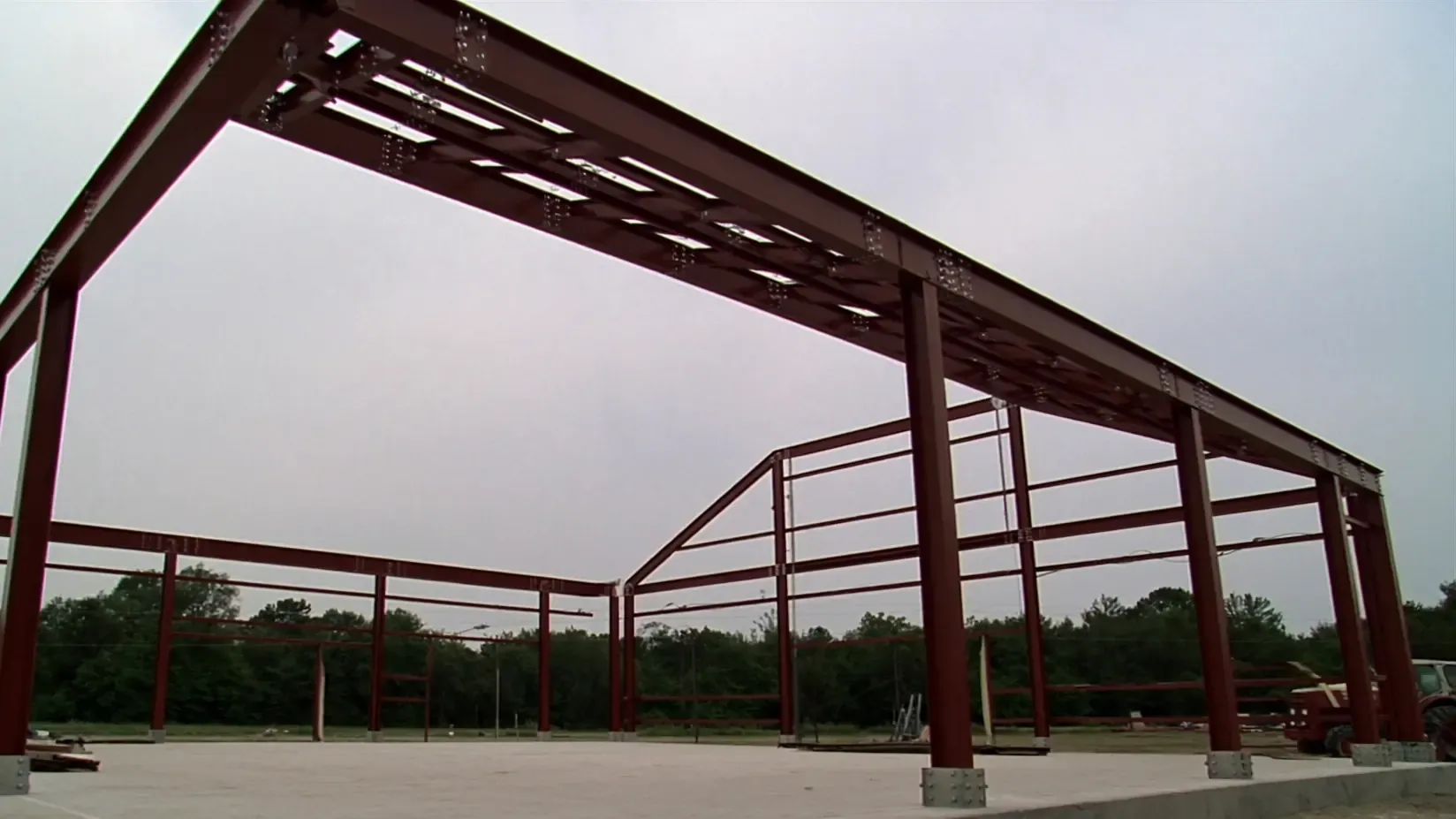
An independent local metal building contractor who works your county prices that half of the job, the slab and the erection, and only the one who walks the lot can put a number on it. The permit is still the owner's to pull, in Travis, Williamson or Burnet County or inside a city limit, and none of that paperwork travels with the steel.
Inside Burnet
City building permit for any added structure
The City of Burnet Building Department says a building permit is required for any construction which physically changes or adds structures to the property, lists a Commercial Building Permit among its permit types, names garages and accessory structures such as storage sheds over 120 square feet among the projects that need one, and says building can begin once the permit is issued and the permit runs out after 180 days if construction has not continued.
Source City of Burnet Building Department, 301 E Jackson St, read 2026-09-20.
Unincorporated Burnet County
County building permit: Class A $25, Class B $400 inside a flood hazard boundary
Burnet County requires building and septic permits, in a fixed order: a 911 address for any new residence or business first, then the building permit, and the county issues no septic permit until the building permit exists.
Source Burnet County, on-site sewage facilities and development permits, read 2026-09-20.
Burnet County, read at the county's and the city's own pages. Every county answers this on its own sheet. The whole record is on that county's sheet.
Steel erection for pre-engineered packages in Central Texas: what does the kit leave to you?
The foundation and the labor. A Texas manufacturer that prints kit prices on its own site states the split in its own words: the listed price is for the building kit only, tax and freight are not included, the door is not included, and the company says it does not provide the foundation and does not offer installation or erection. Those prices are subject to change without notice. The same manufacturer lists branch stores in Bastrop, in Spicewood, its West Austin branch, and in Marble Falls, all three inside these six counties, so an owner here can buy steel close to home and still have nothing in the ground.
What is left is a project of its own: a designed foundation, anchor bolts set to the building's own template, a crew and the equipment to stand the frames, and a permit application in the owner's name. Where that sits in the full sequence, from the lot to the finished shell, is on the Austin area metal building guide.
One Texas manufacturer's own kit pages, read 2026-09-20: what the listed price covers and what it does not.
On a phone this table scrolls sideways.
| Part of the job | What the manufacturer's own pages say |
|---|---|
| The steel package | The listed price is for the building kit only |
| Tax and freight | Not included in the kit price |
| The door | Not included in the kit price |
| The foundation | The manufacturer says it does not provide the foundation |
| Installation and erection | The manufacturer says it does not offer installation or erection |
| The listed price itself | Subject to change without notice |
| Where the kits sell inside this footprint | Branch stores listed in Bastrop, in Spicewood, its West Austin branch, and in Marble Falls |
SourceMueller, Inc., Standard Series Big Workshop 30 x 40 x 12 and Big Barn XL 40 x 60 x 16 product pages, and its Texas branch location pages, read 2026-09-20.
Who designs the slab and sets the anchor bolts under a package you already own?
A foundation designer working from the frame reactions on your own drawings, with a Texas professional engineer on the sealed sheets wherever the statute or the permitting office calls for one. The engineering exemption in Occupations Code 1001.056(a)(2)(F) stops at one story, a total floor area of not more than 5,000 square feet and no clear span greater than 24 feet on the narrow side, and it applies only where no engineering services are offered to the public. Past that span, subsection (b) narrows the duty to the parts that carry the roof: the trusses, beams or other roof supporting members have to be engineered or pre-engineered. A package answers that for the frame. It answers nothing about what the frame sits on.
On the clay east of Austin the exemption thins again. Subsection (c) withdraws the small-building exemption for a residential slab on expansive soil unless the work meets the International Residential Code as applied in the jurisdiction. The bolt pattern, the bolt diameter and the projection above the concrete all come off the manufacturer's own sheets, and they go in before the pour, not after it. That is the single detail that decides whether the first day of erection is a day of work or a day of measuring.
SourceTexas Legislature Online, Occupations Code Chapter 1001, engineers, read 2026-09-20.
Does the building permit come with the package?
No. The owner applies at whichever office has the lot, and the three counties a package most often lands in answer the question three different ways. Burnet County requires building and septic permits in a fixed order, a 911 address for any new residence or business first, then the building permit, and issues no septic permit until the building permit exists; it runs two classes on one application, one for a site outside any flood hazard area and one for a site inside a designated flood hazard boundary, and its page states no building code and describes no plan review. Outside city limits Travis County requires a Development Permit, and a commercial project that is not a dwelling applies for a Development (Non-Residential) permit with a sealed construction cost estimate and a site plan sealed by a Texas-licensed engineer. Williamson County's own pages state that the county issues no building permits, has not adopted the Local Government Code 233 residential building code standards and has no authority to issue a Certificate of Occupancy, and that a property inside a city or its extraterritorial jurisdiction is the city's to check. The office, the phone and the fees for the county above are on the Burnet County sheet.
One statewide rule sits in front of that application. Government Code 469.102 puts the duty to submit plans on the architect, interior designer, landscape architect or engineer with overall design responsibility, no later than the 20th day after the plans are issued, not counting weekends and legal holidays. The owner may not apply for a local building permit or start construction before the plans are submitted, and a local permit official may not accept a permit application for a building subject to the $50,000 line unless registration with the department is verified. Which buildings that line reaches, and what registration costs, is on the TDLR registration guide.
SourcesTexas Legislature Online, Government Code Chapter 469, elimination of architectural barriers, read 2026-09-20; Burnet County, on-site sewage facilities and development permits, read 2026-09-20; Travis County TNR Development Services, Commercial Site Plan, read 2026-09-20; The source was read and does not list this.Williamson County, frequently asked questions, infrastructure and developers, read 2026-09-20.
Nobody in Texas is licensed to build, so how do you pick an erector?
On the record in front of you, because the credential people go looking for does not exist. No state license exists in Texas for anyone who builds a house or works as a general contractor. The Department of Licensing and Regulation's list of 41 regulated industries has no program for either, and the Sunset Advisory Commission records that the Texas Residential Construction Commission was not continued by the Legislature in 2009 and that its Act expired September 1, 2009. That is why no contractor is called licensed anywhere on this site.
The trades that do carry a state license hold it separately from the builder. Contractors who install, repair or maintain air conditioning, refrigeration or heating systems must hold a TDLR license, TDLR issues the electrical licenses from apprentice through master electrician and electrical contractor, and the Texas State Board of Plumbing Examiners licenses the plumbing trade. So a shop that will be conditioned brings state-licensed trades onto the job even though the steel itself brings none. What is left to check on the erection side is insurance, the lift or crane the span calls for, work on buildings of your width and eave height, and whether an erector will set a package the owner bought rather than only steel from its own supplier.
SourcesTexas Department of Licensing and Regulation, regulated industries, and the Sunset Advisory Commission on the Texas Residential Construction Commission, read 2026-09-20; Texas Department of Licensing and Regulation, Air Conditioning and Refrigeration Contractors and Electricians program pages, read 2026-09-20.
The order of work on site
Dirt, then concrete, then steel, in that order and with no overlap worth taking. The pad is cut, shaped and compacted and the site is drained away from the building line; under-slab plumbing and any conduit go in; forms and reinforcing are set; the anchor bolts go in on their template; the concrete is placed and left to reach the strength the foundation sheet names. The pad grading and site prep guide covers that first stage on this ground.
Erection follows in a fixed sequence: base plates down over the bolts, rigid frames stood and braced, purlins and girts run, the frame squared and plumbed, then roof and wall sheeting, trim, gutters and the doors. Delivery timing is the part an owner controls least. The steel ships on the manufacturer's schedule rather than the erector's, and a load that lands beside a slab that is not ready sits outside taking weather while the bolts cure. Booking the foundation and the erection against a known delivery date is the practical shape of the whole job, and it is the first thing worth saying when you ask for a price.
Who prices the slab and the erection
An independent local metal building contractor who works your county, and only the one who stands on the lot can price it. No metal building contractor whose own site names Austin or these six counties publishes a price for a finished building: five such sites were read on 2026-09-20 and each offers an estimate by form or phone. On an erection-only job the number moves on the clear span and eave height, crane and truck access to the pad, what the ground under the slab calls for, how much of the package is already on site and how much is still on order, the doors and trim, and the agency fees, which are the only part of it anyone can quote in advance.
Bring the drawings that came with the package, the anchor bolt plan, the delivery date if you have one, and the address. Those four make the difference between a range and a price.
SourceThe builders' own pages were read and print no such price.Seven Texas metal building company websites, five of them naming the Austin area, read 2026-09-20.
Asked before pricing
Does steel erection for pre-engineered packages in Central Texas include the slab?
No. A Texas manufacturer that publishes kit prices on its own site states that the listed price is for the building kit only, that tax, freight and the door are not included, and that it does not provide the foundation or offer installation or erection. The slab is a separate design and a separate pour, sized from the frame reactions on your own drawings and from what the ground under the lot does. An independent local metal building contractor who works your county can price the slab and the erection together.
Whose name goes on the permit if I bought the steel package myself?
The owner's, at whichever office has the lot. Buying a package opens no permit file anywhere. On a covered building at or above the $50,000 line, Government Code 469.102 adds a fixed sequence: the owner may not apply for a local building permit or start construction before the plans are submitted to the Texas Department of Licensing and Regulation, and a local permit official may not accept the application unless registration with the department is verified.
Does a pre-engineered package still need a Texas engineer?
Sometimes, and the package answers only part of the question. Occupations Code 1001.056(a)(2)(F) exempts a one-story building of not more than 5,000 square feet with no clear span greater than 24 feet on the narrow side, where no engineering services are offered to the public. Past that span, subsection (b) requires the trusses, beams or other roof supporting members to be engineered or pre-engineered. Subsection (c) withdraws the exemption for a residential slab on expansive soil unless the work meets the residential code as applied in the jurisdiction.
Is a steel erector licensed in Texas?
No, and neither is any builder or general contractor. The Department of Licensing and Regulation's list of 41 regulated industries carries no program for either, and the Sunset Advisory Commission records that the Texas Residential Construction Commission was not continued by the Legislature in 2009, its Act expiring September 1, 2009. The trades inside the shell are separate: air conditioning, refrigeration and heating contractors and electricians hold TDLR licenses, and the Texas State Board of Plumbing Examiners licenses the plumbing trade.
Free estimate, six questions
Price steel erection for pre-engineered packages in Central Texas
The county tells a contractor which permit office your lot answers to. The building and the timing tell them what to look at first. Pricing it is free, and you owe nothing either way.
Ready to put a price on the building?
Your request goes to an independent local metal building contractor serving Central Texas, not a national lead list. Pricing it is free, and you owe nothing either way.
Last reviewed 2026-09-20.